
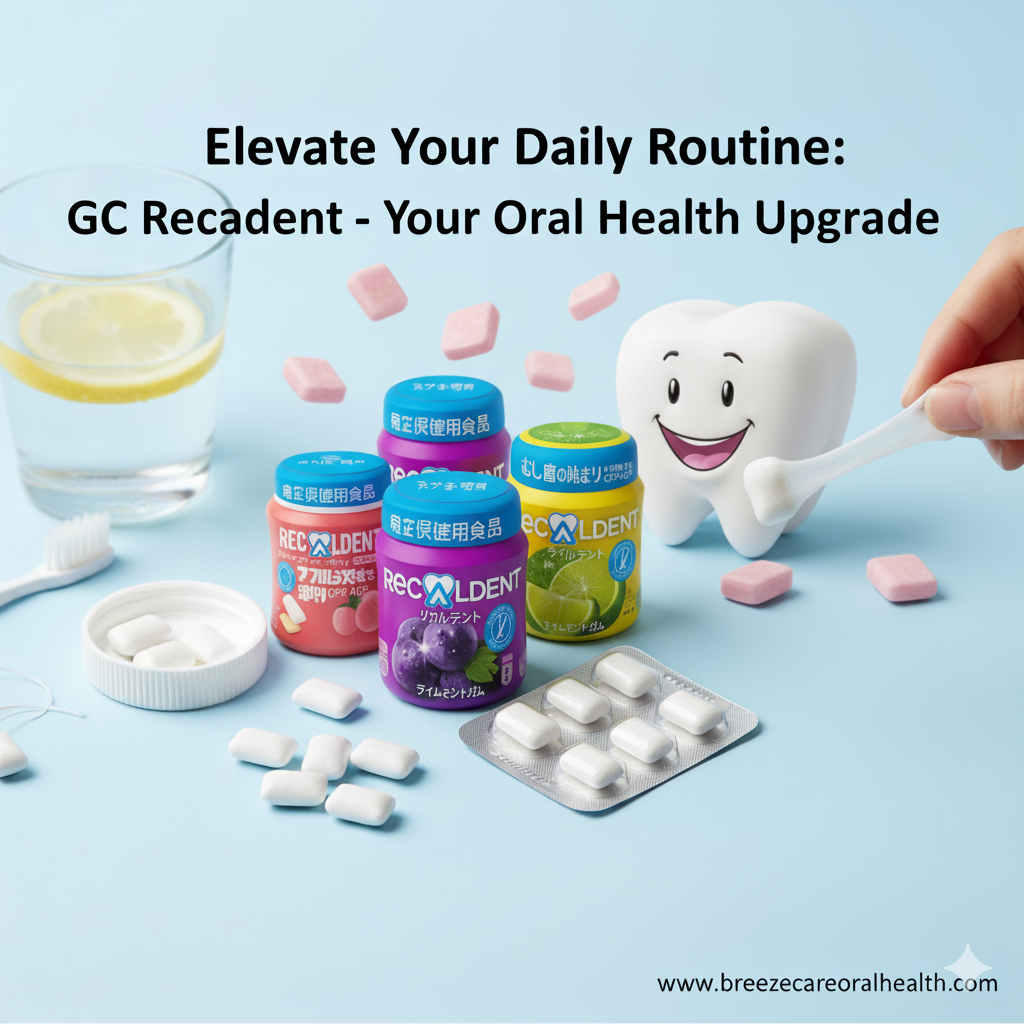
Saliva plays a central role in maintaining balance in the mouth. While it is often overlooked, saliva helps rinse away food particles, supports the natural environment of the oral microbiome, and contributes to everyday oral comfort.
Because saliva is so important, many oral health routines include habits that encourage normal saliva flow throughout the day. One simple example is chewing sugar-free gum after meals or drinks.
Important note
This article is general educational information and is not individual medical or dental advice. Products containing CPP-ACP (Recaldent) are derived from milk protein and are not suitable for people with a milk protein allergy.
Why saliva matters in oral health
Saliva is sometimes described as the mouth’s natural regulator. It helps wash away food debris, supports normal oral comfort, and contributes to the balance of the oral environment.
When saliva flow is reduced — for example overnight or during long periods without eating or drinking — the mouth may feel dry or less fresh. This is one reason why oral routines often include simple habits that help stimulate saliva during the day.
How chewing gum stimulates saliva
Chewing activates the salivary glands, increasing saliva production. This response is a natural reflex that occurs whenever we chew food.
Sugar-free chewing gum takes advantage of this natural process. Because it contains no sugar, it can be chewed between meals as part of a daily routine without contributing to sugar intake.
For this reason, chewing gum is commonly used after meals, coffee, or snacks when brushing teeth is not immediately convenient.
What makes Recaldent gum different?
Some sugar-free chewing gums contain an ingredient known as CPP-ACP, which is marketed under the trademark name Recaldent®.
CPP-ACP is derived from milk protein and is designed to carry calcium and phosphate in a soluble form. Because of this property, it has been incorporated into a range of oral-care products including chewing gum and dental creams.
When a chewing gum contains Recaldent, it simply means that this CPP-ACP ingredient is included as part of the formulation.
When do people typically chew Recaldent gum?
Many people chew sugar-free gum at moments during the day when brushing is not practical, such as:
- after meals
- after coffee or drinks
- while travelling or commuting
- during work or study breaks
In these situations, chewing gum can help stimulate saliva and create a refreshed feeling in the mouth.
Sugar-free gum as part of everyday oral routines
Chewing gum is not intended to replace brushing or other oral hygiene practices. Instead, it is often used as a convenient daytime habit that fits between regular brushing and flossing.
In countries such as Japan, sugar-free chewing gum is widely incorporated into everyday oral-care routines, which is why Recaldent chewing gum is commonly available in multiple flavours and formats.
Learn more about Recaldent chewing gum
If you would like to explore the Recaldent chewing gum flavours and formats currently available through BreezeCare, you can view the collection here:
View the Recaldent chewing gum collection
Recaldent® is a trademark of the Mondelēz International group, used under licence.


