
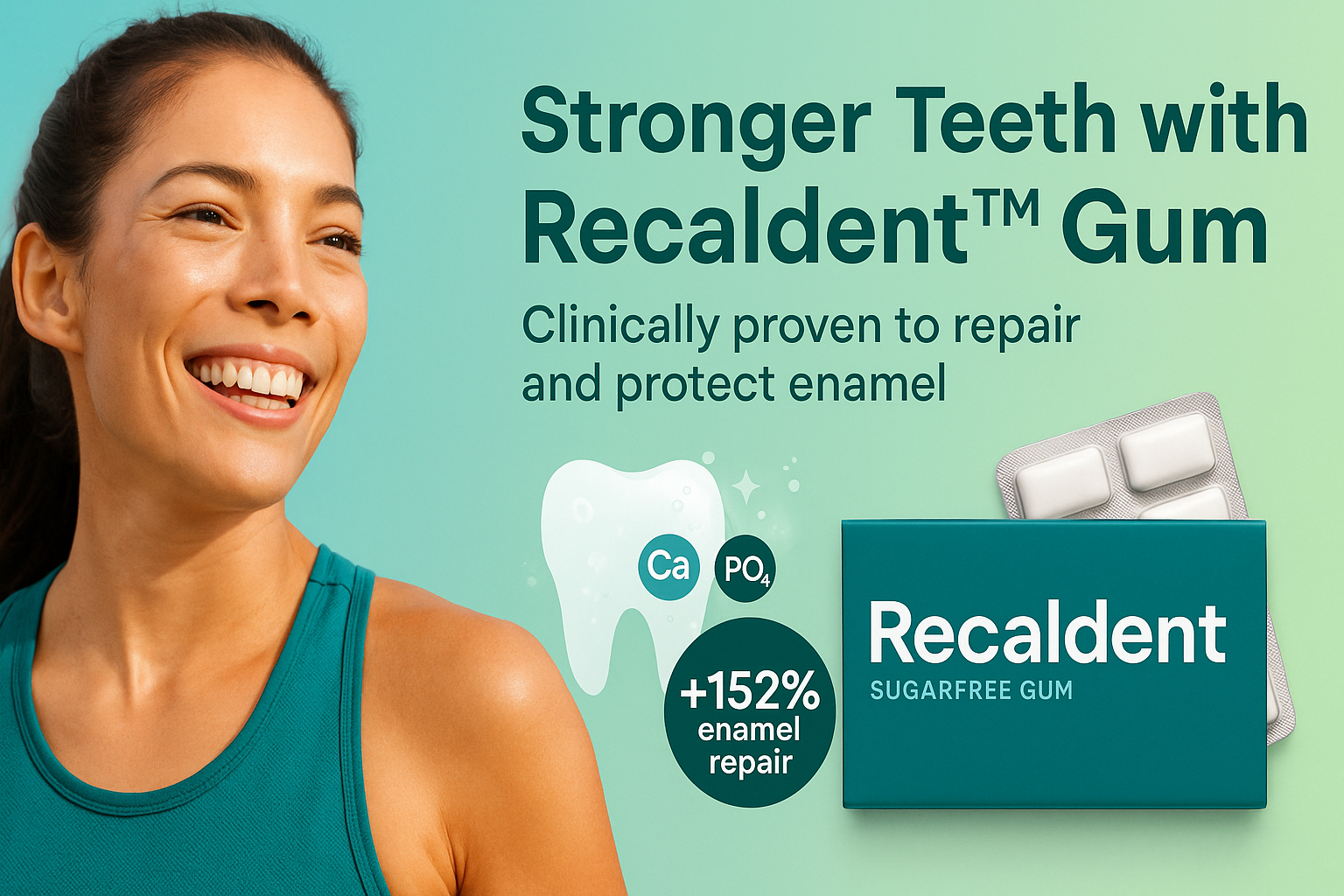
Tooth enamel is constantly exposed to everyday changes in the mouth. Foods, drinks, and natural bacterial activity can temporarily lower the pH in the oral environment, which influences how minerals move in and out of enamel.
Fortunately, the mouth has natural defence systems — including saliva and mineral balance — that help maintain enamel over time. This article explains how chewing gum, saliva, and ingredients such as CPP-ACP (Recaldent®) relate to these everyday processes.
Important note
This article is general educational information and is not individual medical or dental advice. Products containing CPP-ACP (Recaldent) are derived from milk protein and are not suitable for people with a milk protein allergy.
Why enamel mineral balance matters
Enamel is the outer surface of the tooth and is primarily made from minerals such as calcium and phosphate. These minerals are constantly moving in and out of enamel depending on conditions inside the mouth.
After eating or drinking, acids produced by bacteria may temporarily lower the pH in the mouth. Over time, saliva helps neutralise these acids and restore a more balanced environment.
The natural role of saliva
Saliva plays an important role in maintaining oral balance. It helps wash away food particles, neutralise acids, and provide minerals that contribute to the natural maintenance of tooth enamel.
Many daily oral-care habits are designed to support this natural process, including drinking water regularly and chewing sugar-free gum after meals.
What is CPP-ACP?
CPP-ACP is a milk-derived compound used in certain oral-care products. It stands for casein phosphopeptide–amorphous calcium phosphate.
The casein component helps stabilise calcium and phosphate in a soluble form. Because of this property, CPP-ACP has been incorporated into a variety of dental products including creams, chewing gums, and professional treatments.
The trademark name for this technology is Recaldent®.
Why CPP-ACP appears in chewing gum
Chewing gum provides a convenient format for oral-care ingredients because it is commonly used after meals or snacks. The act of chewing naturally stimulates saliva flow.
Some sugar-free chewing gums include CPP-ACP as part of their formulation. These gums combine the everyday habit of chewing sugar-free gum with an ingredient used in certain dental products.
When people typically chew Recaldent gum
Many people chew sugar-free gum at moments when brushing is not immediately possible, such as:
- after meals
- after coffee or drinks
- while travelling
- during work or study breaks
Chewing gum in these situations can help stimulate saliva and contribute to a refreshed feeling in the mouth.
Recaldent chewing gum formats
In some countries, particularly Japan, Recaldent chewing gum is available in multiple flavours and packaging formats. This reflects the popularity of chewing gum as a routine oral habit after meals.
If you would like to explore the Recaldent chewing gum formats currently listed at BreezeCare, you can view them here:
View the Recaldent chewing gum collection
Recaldent® is a trademark of the Mondelēz International group, used under licence.


